How Was Hells Canyon Formed? The Geological Story Behind North America’s Deepest River Canyon
Stand along the edge of Hells Canyon and it’s hard not to wonder how something this enormous came to exist.
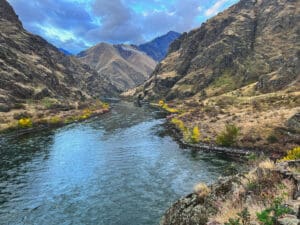
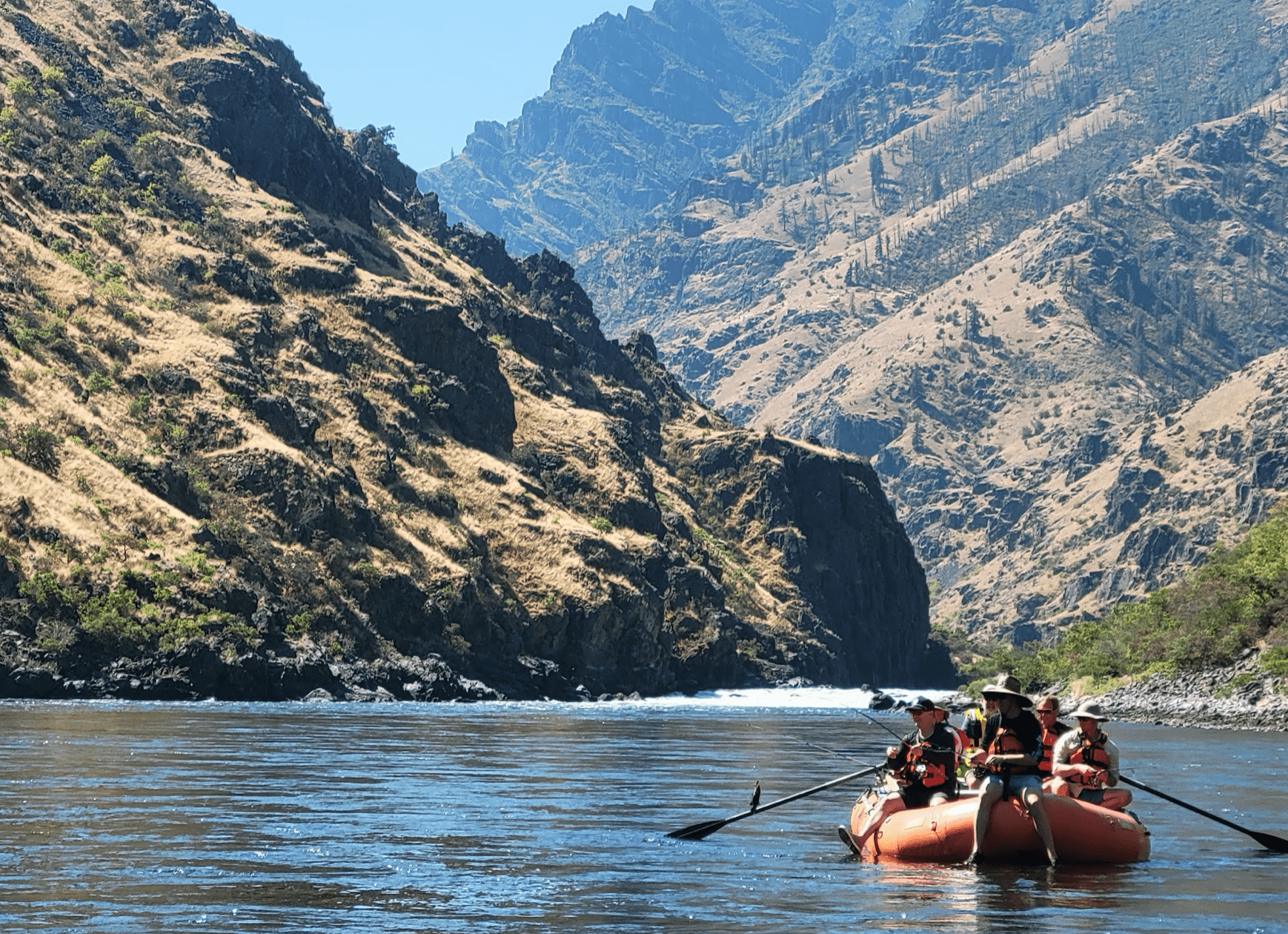
Towering cliffs rise thousands of feet above the Snake River. Dark volcanic rock forms dramatic canyon walls, while lighter-colored rock and rugged ridges reveal layers of an incredibly long geological history.
So, how was Hells Canyon formed?
The short answer is: fire, tectonic activity, erosion, and the Snake River all played a role.
But the full story is much more interesting.
Hells Canyon wasn’t created by one massive event. It developed over millions of years as volcanic eruptions built layers of rock, tectonic forces reshaped the landscape, and the Snake River and other erosional forces gradually carved the canyon deeper.
Today, you can experience the result firsthand.
Explore Hells Canyon on a Snake River excursion with Tributary Whitewater Tours and see this extraordinary landscape from the river.
A Canyon Millions of Years in the Making
Hells Canyon is located along the border of Idaho and Oregon, with the broader Snake River region extending into Washington.
The landscape we see today is the result of an incredibly long sequence of geological events.
Long before anyone was rafting the Snake River or hiking along the canyon rim, volcanic eruptions were reshaping the region.
Tectonic forces were also moving and deforming the Earth’s crust. Over immense stretches of time, these processes created the foundation for the mountains, valleys, and rock formations that would eventually become Hells Canyon.
Then came one of the canyon’s most important sculptors:
Water.
Volcanoes Built the Foundation
Much of Hells Canyon’s dramatic scenery is made from volcanic rock.
Ancient volcanic activity sent enormous flows of lava across portions of the Pacific Northwest. As the lava cooled and hardened, it formed layers of basalt.
Over time, these layers became part of the geological foundation of the canyon.
Look closely at the canyon walls and you’ll see evidence of this volcanic past: dark, layered rock stacked one section above another.
These aren’t simply cliffs.
They’re pages in a geological history book.
Each layer represents a different chapter in the region’s volcanic past, giving geologists clues about what the landscape looked like millions of years ago.
But volcanic activity alone didn’t create Hells Canyon.
The landscape still needed something powerful enough to carve through all that rock.
Enter the Snake River.
The Snake River: Hells Canyon’s Great Sculptor
For millions of years, the Snake River has been cutting through the landscape, carrying water, sediment, and rock downstream.
As the river flowed through the region, erosion gradually removed material from the landscape and deepened existing valleys and channels.
This wasn’t a process that happened overnight.
It happened year after year, century after century, and millennium after millennium.
The result is the enormous canyon system we see today.
The Snake River continues to wind through Hells Canyon, creating a striking contrast between the dark canyon walls and the relatively narrow ribbon of water below.
And that’s one of the best ways to appreciate the scale of Hells Canyon: see it from the river itself.
A Snake River expedition through Hells Canyon puts you at the bottom of the canyon, surrounded by the geological history that took millions of years to create.
Erosion Did the Heavy Lifting
If volcanoes built much of the rock and tectonic forces shaped the landscape, erosion did much of the carving.
Water is incredibly powerful when you give it enough time.
The Snake River continually transports sediment and debris downstream. Weathering, runoff, floods, and other natural processes also break down and move rock.
Over millions of years, those small changes add up.
A crack in a rock becomes a larger fracture. A small channel becomes a deeper ravine. A cliff face slowly changes shape.
Eventually, those countless tiny acts of erosion become something enormous:
Hells Canyon.
And the process isn’t necessarily finished. Rivers and weather continue to alter the landscape today.
Why Are the Canyon Walls So Dramatic?
One of the first things you’ll notice in Hells Canyon is the contrast between its enormous cliffs and the relatively narrow river below.
The canyon reaches incredible depths, with the Snake River sitting thousands of feet below the surrounding ridges.
Different types of rock erode at different rates, which helps create the canyon’s varied walls, ledges, slopes, and formations.
You’ll see:
- Towering basalt cliffs
- Granite and other older rock formations
- Deep side canyons and ravines
- Exposed geological layers
- Rugged mountain slopes
- River-carved valleys
Together, these features create the dramatic landscape that makes Hells Canyon so recognizable.
Curious about the canyon’s incredible depth? Read more about whether Hells Canyon is the deepest canyon in the world.
Hells Canyon Is More Than Just Geology
The rocks may tell the geological story, but Hells Canyon is far more than a collection of cliffs and formations.
The canyon supports a remarkable range of plants and wildlife, thanks in part to the variety of elevations, habitats, and microclimates found throughout the region.
Depending on where and when you explore, you may encounter:
- Bald eagles
- Bighorn sheep
- Deer
- Mountain goats
- Osprey
- Wildflowers and native vegetation
The canyon is also rich in human history and culture, with evidence of Indigenous peoples and later settlers throughout the region.
That’s part of what makes exploring Hells Canyon so fascinating.
You’re not simply looking at an old landscape.
You’re looking at a landscape that has been changing, supporting life, and shaping human experiences for millions of years.
Experience the Geology from the River
You can read about Hells Canyon all day, but there’s something different about actually being down inside it.
From the rim, you can appreciate the canyon’s scale.
From the Snake River, you can appreciate its depth.
As you travel through the canyon, the walls rise around you. You’ll see layers of rock overhead, narrow side canyons disappearing into the wilderness, and geological formations that are difficult to fully appreciate from above.
For an even more immersive experience, Snake River rafting through Hells Canyon combines the geology with adventure.
Instead of simply looking at the canyon, you’re traveling through it.
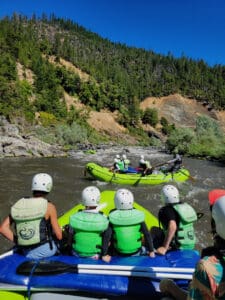
You can navigate whitewater, stop along remote river beaches, explore historic sites, and spend the night beneath the canyon walls on a multi-day expedition.
When Should You Visit Hells Canyon?
The canyon changes dramatically with the seasons.
Spring brings snowmelt, fresh greenery, and changing river conditions.
Summer offers long days, warm temperatures, and excellent opportunities for rafting and exploring.
Fall brings cooler temperatures, changing colors, and often a quieter atmosphere.
Winter transforms the higher elevations into a peaceful, snow-covered landscape.
Wondering when conditions will be best for your trip? Check out our guide to the best time to visit Hells Canyon.
And if you’re looking for a more comfortable way to experience the wilderness, Snake River glamping offers another way to immerse yourself in the landscape.
The Best Way to Understand Hells Canyon? Experience It.
Hells Canyon wasn’t created in a single moment.
It is the result of millions of years of geological change.
Volcanoes laid down layers of rock. Tectonic forces reshaped the landscape. Weather and erosion wore away at the surface. And the Snake River continued carving its path through the region.
The result is one of the most dramatic river canyons in North America.
And the incredible thing is that you don’t have to be a geologist to appreciate it.
You just have to stand beneath those towering walls and look up.
Better yet, get on the river and experience the canyon from the bottom.
Explore Hells Canyon with Tributary Whitewater Tours
Ready to see the geology for yourself?
Explore Snake River excursions with Tributary Whitewater Tours and experience Hells Canyon from the water.
For the full adventure, check out our Snake River Hells Canyon rafting trips.
You can also learn more about Snake River vacations or discover Snake River glamping for a more comfortable wilderness experience.
Millions of years created Hells Canyon. The river is waiting for you to explore it.